
The Bog Bride

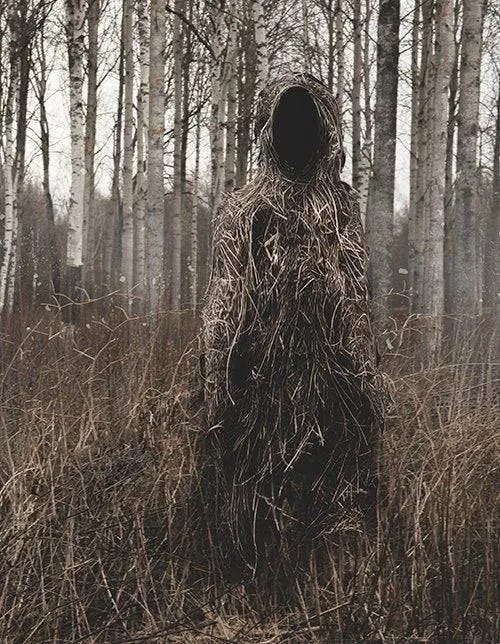
Based on the prompt by Mathew C. Bryant • Horror Poet, Labyrinthia Mythweaver, & Conor MacCormack.
They found her where the ground felt wrong. Not quite soft. Not quite solid either. The kind of place where your foot sank just a little too easily, and you had the strange feeling that if you stood still long enough, the earth might decide to keep you.
Dr. Elias Voss arrived three days later.
By then, the police had done what they could. A thin strip of tape hung between two pale birch trees, loose and half-forgotten. The constable who met him didn’t walk in.
“It’s straight ahead,” he said, pointing into the trees. “You’ll see it.”
He didn’t say her.
Elias had seen enough bodies in his life not to care about tone. Most of his work dealt with the preserved ones—the ones that refused to rot properly. Bog bodies. Mummified remains. Things caught in that uneasy space between being gone and being kept.
This one felt different before he even saw it.
The forest was too quiet. No birds. No insects. Just the dull sound of his boots pressing into wet ground, and something softer underneath that—something that felt like movement, deep below.
He saw the shape first.
At a distance, it looked like a clump of reeds and dark peat rising slightly from the earth. Then it resolved into something human.
She was sitting.
That alone was enough to slow him down.
Bodies didn’t end up like that on their own.
Her knees were drawn in. Her arms hung loosely at her sides. Roots had grown through her, threading into what remained of her body. Grass and reeds wrapped around her, holding her together like something stitched and forgotten.
Her face was—
It took him a second to understand what he was looking at.
There was nothing there.
No damage or decay.
Just absence.
Like someone had removed the idea of a face and left the space behind.
Elias crouched beside her, frowning.
“Alright,” he said quietly. “Let’s start with what we know.”
Routine helped. It always did.
He took out his camera and snapped a few photos. Adjusted the angle. Took another.
For a moment, he thought he saw something behind her. A darker shape between the trees.
He lowered the camera.
There was nothing there.
He stayed crouched for a second longer than necessary, then stood.
“Long drive,” he muttered. “That’s all.”
That night, he dreamed.
The depth.
A slow, suffocating descent into blackness thick as oil. He tried to move, but the water held him, cradled him, pressed in from all sides. And somewhere within it, something stirred.
Not in images that made sense.
Just the feeling of being somewhere deep and heavy. Like being held under water, except there was no panic. Just pressure. Stillness.
And then a voice.
“Elias.”
He woke immediately.
The room was quiet. Too quiet.
He laid still, trying to place what had just happened. It wasn’t the dream that unsettled him. It was the voice.
He knew it.
That was the problem.
He sat up slowly, pressing his hand against his face.
“No,” he said under his breath. “Not this.”
Mara.
He had not heard her voice in three years. Not since the accident. Not since the call that had come too late, with too little left to identify.
He sat upright, his breath shallow.
“This is ridiculous,” he muttered. “Stress…fatigue.”
But the word Elias lingered, soft and familiar.
He did not sleep again.
Back at the temporary lab set up in a rented trailer on the edge of the forest, the samples didn’t help.
If anything, they made things worse.
Elias had spent enough time studying preserved bodies to recognize patterns. There were always explanations—temperature, chemical conditions, oxygen levels.
This didn’t fit any of them.
The tissue wasn’t just intact. It reacted.
Nothing he could measure cleanly. But there was something off about it. A sense that it hadn’t settled into being dead.
Under magnification, he saw plant fibers woven into the tissue.
That part wasn’t unusual.
What bothered him was how natural it looked. Not like intrusion, but integration.
Like the body and the ground had stopped being separate things.
He leaned back in his chair, staring at the slide.
“That’s not possible,” he said.
The camera sat beside him.
He hesitated, then picked it up and scrolled through the images.
The first few were normal.
Then he saw it again.
That shape behind her.
In one photo, it was faint. Easy to ignore.
In the next, it was clearer.
Closer.
Elias’s grip tightened slightly on the camera.
“I didn’t see you,” he said quietly.
The last image showed only the body.
But something about it had changed.
He zoomed in.
The angle of her head looked… different.
Turned, just slightly.
As if she had been listening.
The locals would not speak of it directly.
“It’s old,” said the woman who ran the small store by the road. Her hands trembled as she counted out his change. “Older than the church. Older than the village.”
“What is?” Elias asked.
She glanced toward the forest, then back at him.
“You don’t go where the ground breathes.”
“I’m not asking about superstition. I’m asking about history.”
“That is history,” she said, sharper now. “You think we tell stories for nothing?”
Elias held her gaze.
“I think stories change. I’m interested in what they started as.”
For a long moment, she said nothing. Then, quietly:
“There was a famine. Long ago. Before my grandmother’s grandmother. Crops failed. Animals died. People started to vanish in the night.”
“Vanished how?”
She shook her head. “Does it matter?”
“Yes.”
A pause.
“They said the earth was hungry. That it needed… something given. Not taken.”
Elias felt a cold thread wind through his chest.
“A sacrifice.”
“A bride,” she corrected. “Dressed in white. Walked into the bog before dawn. They said she didn’t scream.”
“And it worked?” he asked, before he could stop himself.
The woman’s eyes darkened.
“The famine ended.”
Elias leaned forward. “And after that?”
“They kept giving,” she said. “Not because they wanted to. Because they were afraid to stop.”
That night, the voice came again.
Stronger.
Closer.
“Elias.”
He stood at the edge of the forest without remembering how he had gotten there. The trees loomed pale and silent, their thin trunks like bones.
“You’re not real,” he said into the darkness.
Voices soft as the wind answered him.
“Come.”
The word was layered, fractured, overlapping. And beneath them, unmistakable, was Mara.
His chest tightened painfully.
“You died,” he said. “I saw—”
No, he hadn’t. He had seen a report. A closed casket. Words on paper.
“Come.”
His feet moved before he could decide.
The ground softened under him, the earth yielding with each step. The deeper he went, the more the air thickened, damp and heavy, carrying a faint, sweet rot.
He reached the clearing.
The body—no, the Bride—sat where he had left her.
But she was no longer still.
The reeds that bound her shifted slowly, as though stirred by an unseen current. The dark hollow of her face seemed deeper now, wider, a void that pulled at his gaze.
“Elias.”
Mara’s voice was clearer here. Warm. Familiar.
He took a step closer.
“I know that voice,” he whispered. “But it’s not you.”
Something in the reeds tightened.
The ground around her rippled faintly.
“Not… only,” the voices said.
Elias froze.
Beneath the surface of the bog, shapes moved. Pale forms, half-seen through the dark water and peat. Limbs. Faces. Bodies suspended in the earth, preserved in their final moments.
They shifted as one.
A breath, drawn deep beneath the ground.
“She remembers,” the voices murmured. “All of them. All of you.”
Elias’s pulse thundered in his ears.
“This is some kind of… biological phenomenon,” he said, though the words sounded thin, hollow. “A natural process. Preservation—”
“Stay,” Mara’s voice said, soft and aching. “You don’t have to leave me again.”
His vision blurred.
“I didn’t leave you,” he said. “You were—”
“Alone.”
The word cut through him.
He had been alone. For three years, he had built a life around absence, around the quiet certainty that what was gone would remain gone.
But here—
Here was her voice. Her cadence. The small inflections no one else would know.
“I can’t,” he said, though his feet carried him forward.
The ground gave way slightly beneath him, cool and yielding.
“Stay,” the voices whispered.
The Bride moved.
Slowly, with a grace that was almost ceremonial, her head lifted. The hollow of her face angled toward him, and for an instant, Elias thought he saw something within it—a flicker, a suggestion of features, of recognition.
Of longing.
“She was given,” the voices said. “So others could live. But she did not end. She waited.”
“For what?” Elias asked, his voice barely audible.
“For more.”
The ground shifted again. The water around her stirred, dark and thick.
“Not to die,” Mara’s voice said gently. “To join.”
Elias stood at the edge of the bog, the cold seeping through his boots.
“Join what?” he asked.
A pause.
Then, softly:
“Us.”
The shapes beneath the surface pressed closer, their forms clearer now—faces turned upward, eyes open in the dark.
Present.
Watching.
Waiting.
Elias closed his eyes.
For a moment, he saw Mara as she had been—laughing in sunlight, alive in a way that felt impossibly distant now. Then that image shifted, softened, dissolved into the layered chorus calling his name.
He stepped forward.
The bog accepted him without resistance. The ground opened, cool and thick, rising around his ankles and his knees. There was no panic, no sudden fear—only a strange, heavy calm.
“Elias,” the voices whispered, surrounding him.
“I’m here,” he answered.
The surface closed over him slowly, the world above dimming into gray, then darkness. The pressure of the earth wrapped around him. Holding.
Welcoming.
For a final moment, there was only silence.
Then, deep within the bog, something shifted.
A breath.
By morning, the forest was still.
The tape at the edge of the trees fluttered weakly in the wind. The constable returned, called out, and received no answer. The trailer stood empty.
At the clearing, the bog lay quiet and undisturbed.
Only the figure at its center had changed.
It seemed… taller.
And where there once had been only the faintest suggesion of form, something new had taken shape within the hollow of its face.
Not features.
But enough to suggest the beginning of one.
The vigil continued.
As it always had.
Now this is EXACTLY what I want to read!
Great job. This transported me to the bog, and oh how I want to vanish into it too